



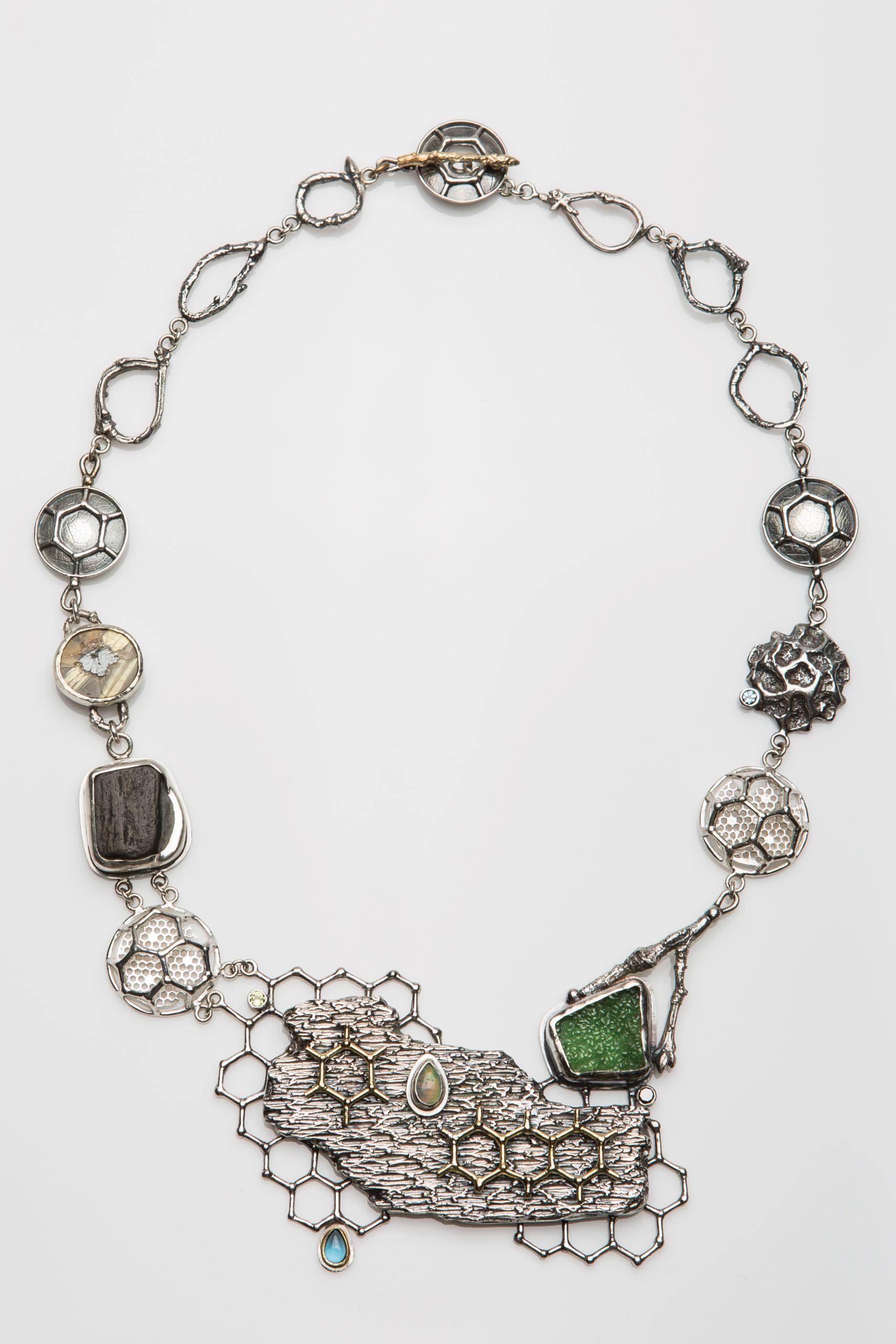
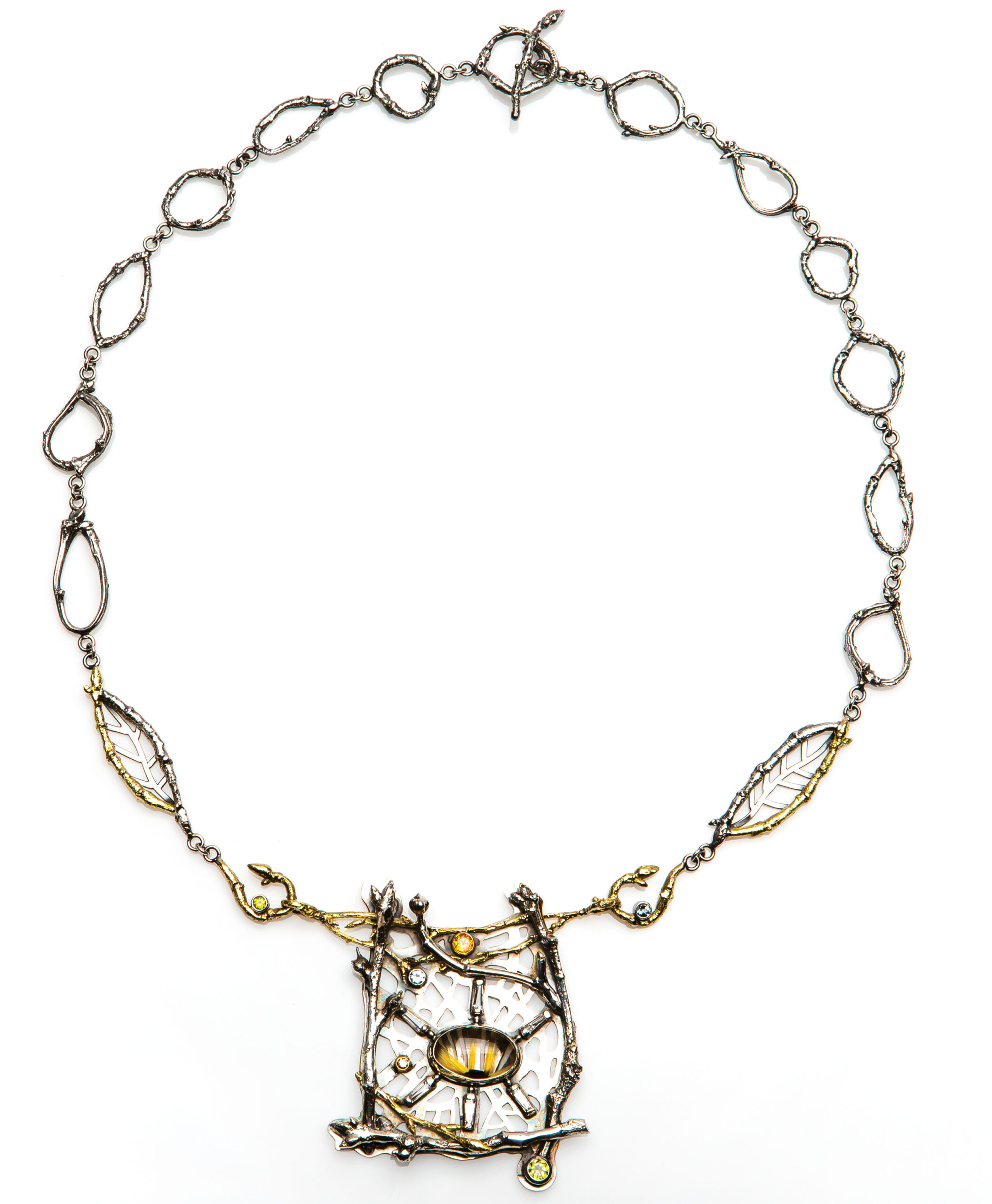
Long-Term Carbon Cycle Necklace — sterling silver, 22K gold, 14K gold, jet, rutilated quartz, smithsonite, aquamarine, diamond, peridot — see description at end of page

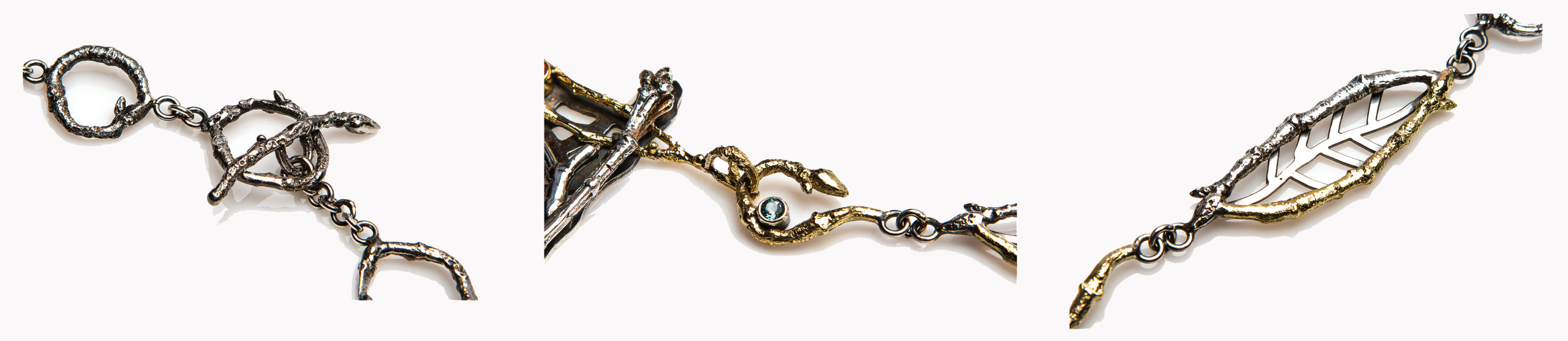
see description at end of page
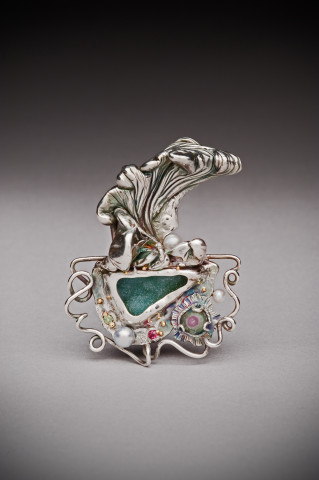
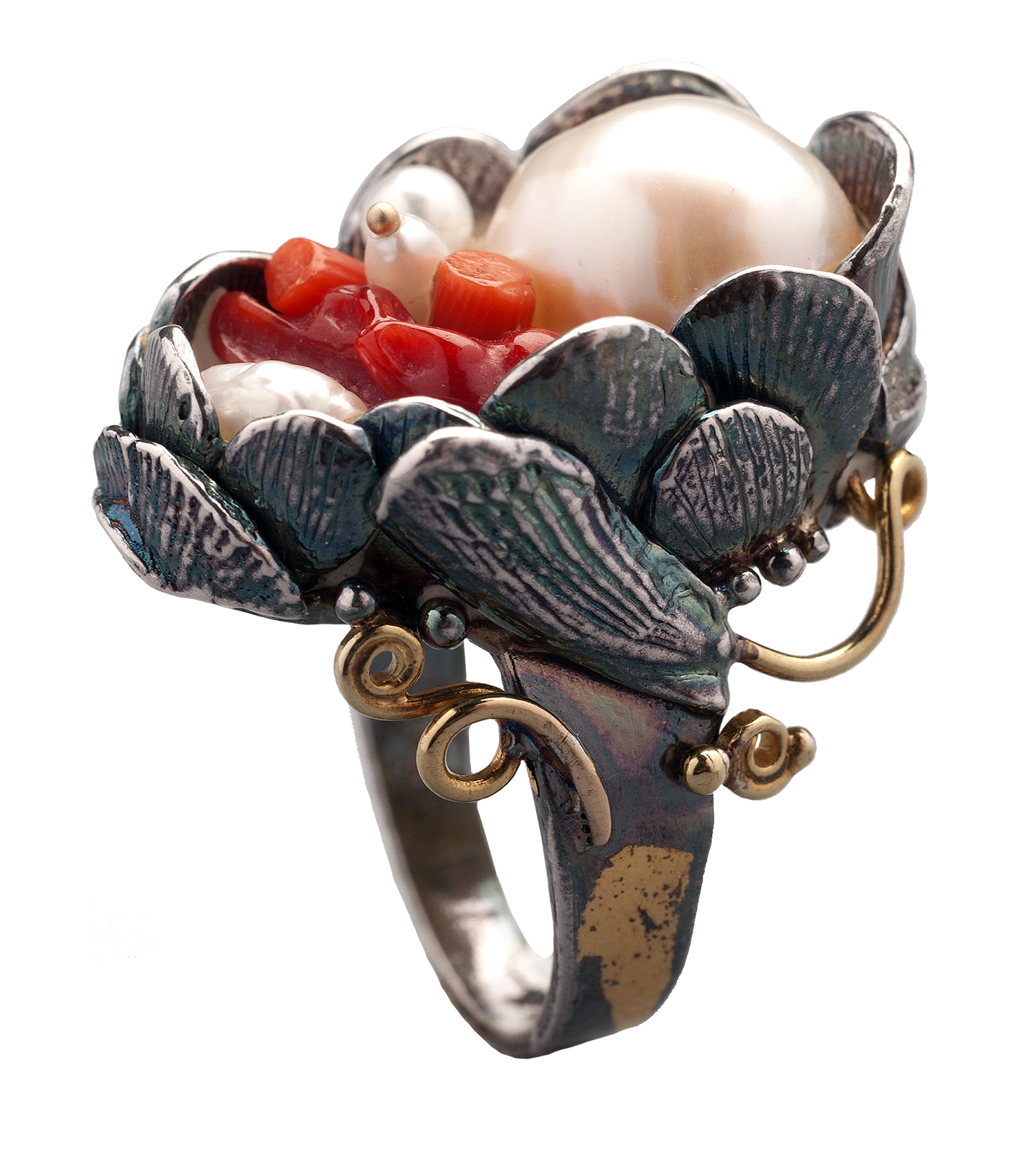
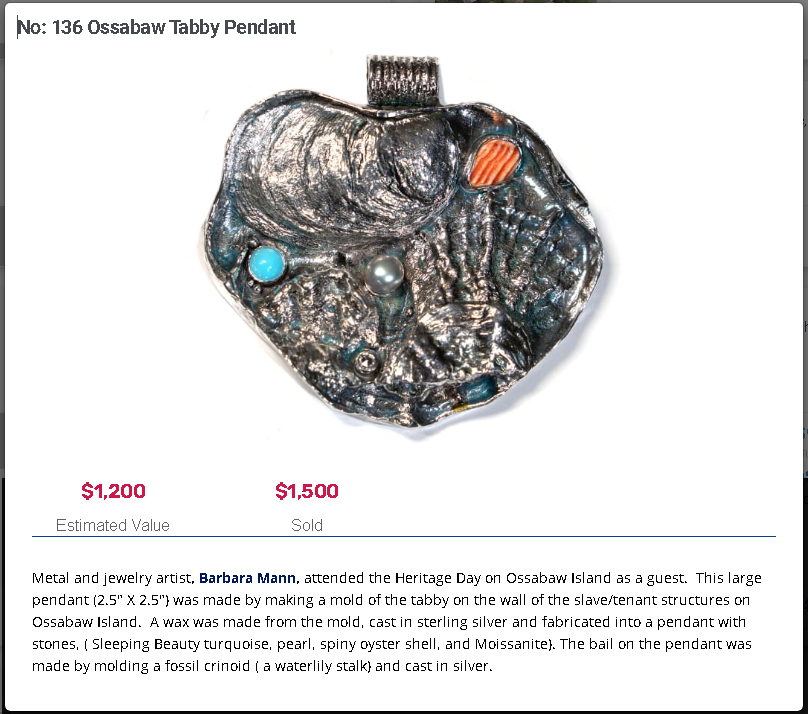
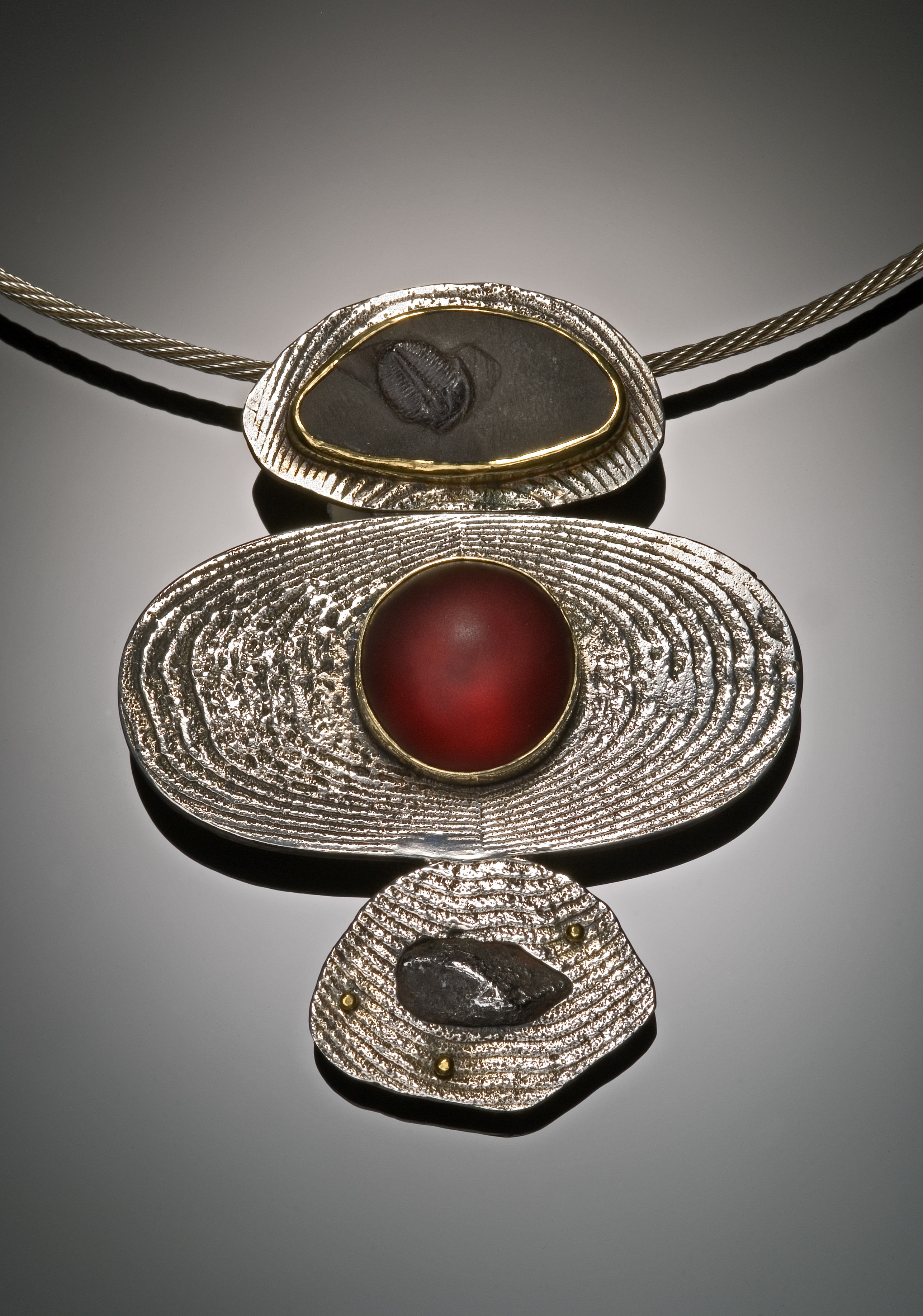
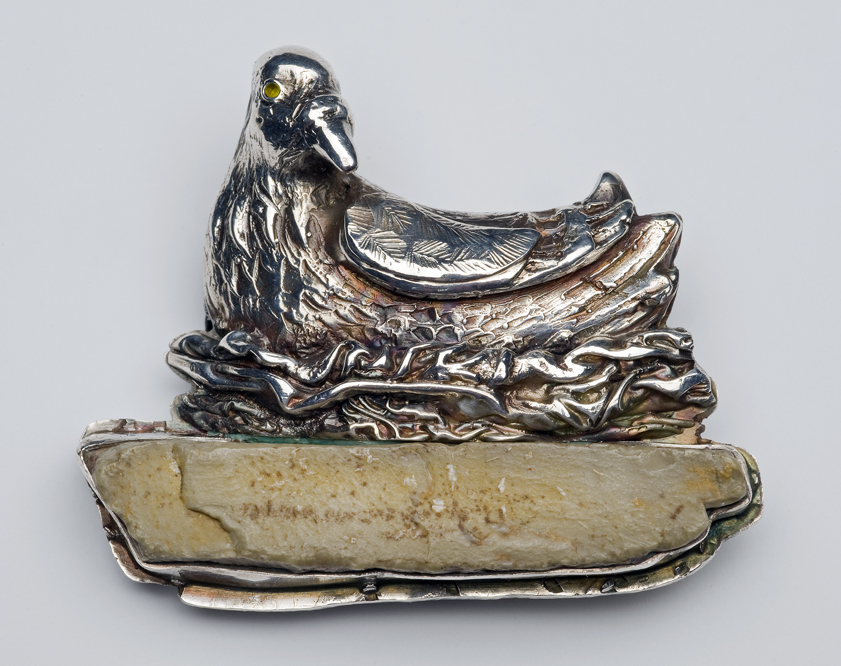
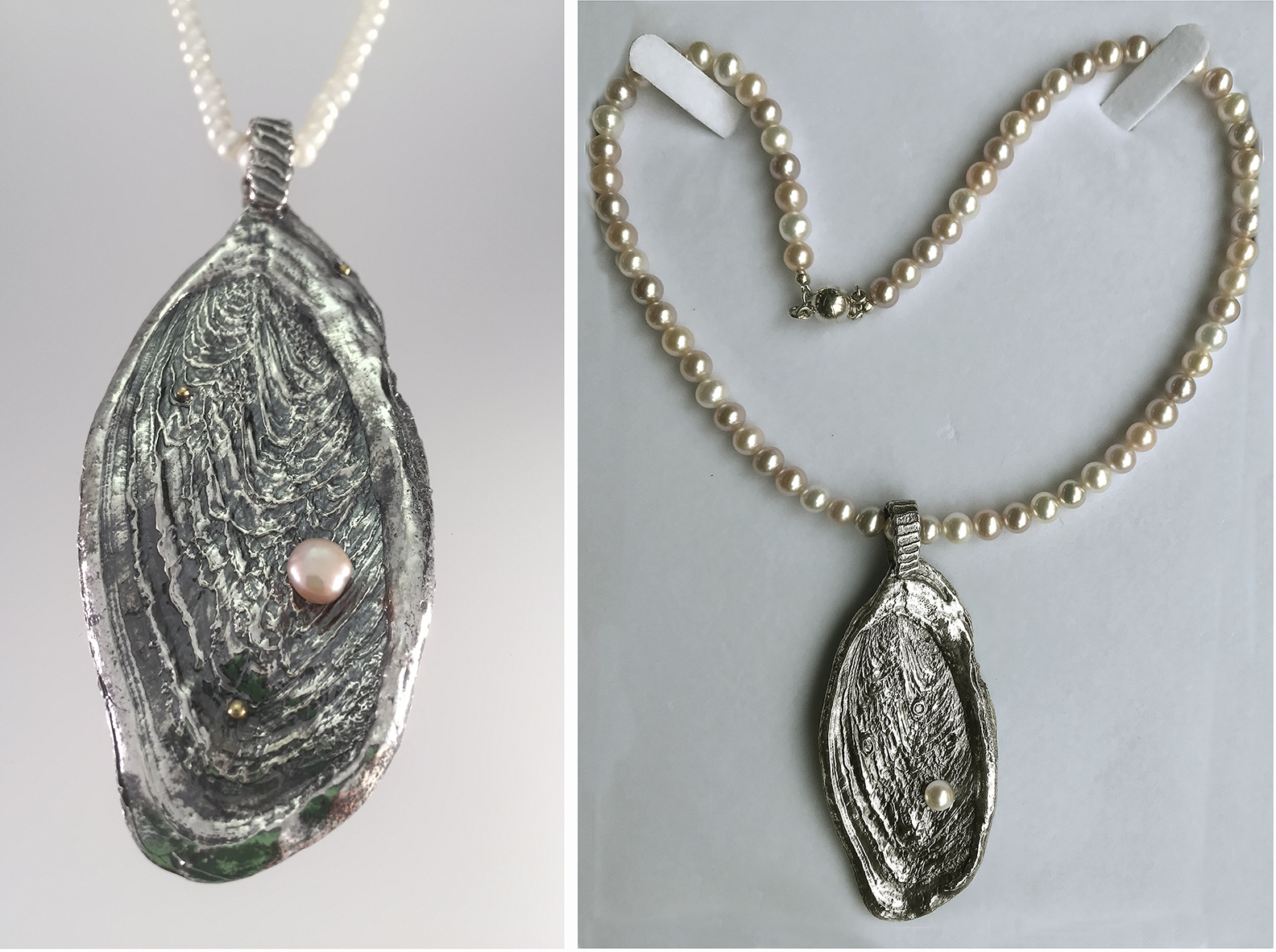 Oyster Shell Pendant — sterling silver, 14K gold, 18K gold, pearl
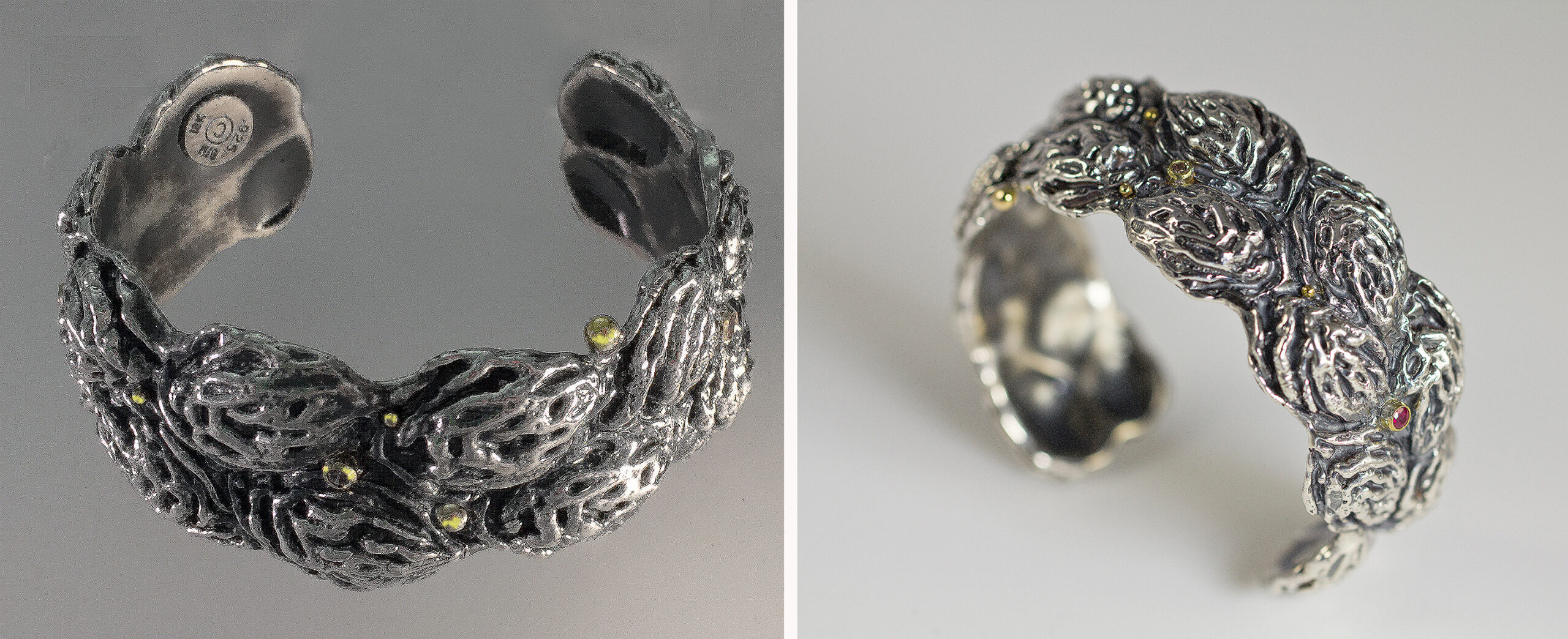
see description at end of page
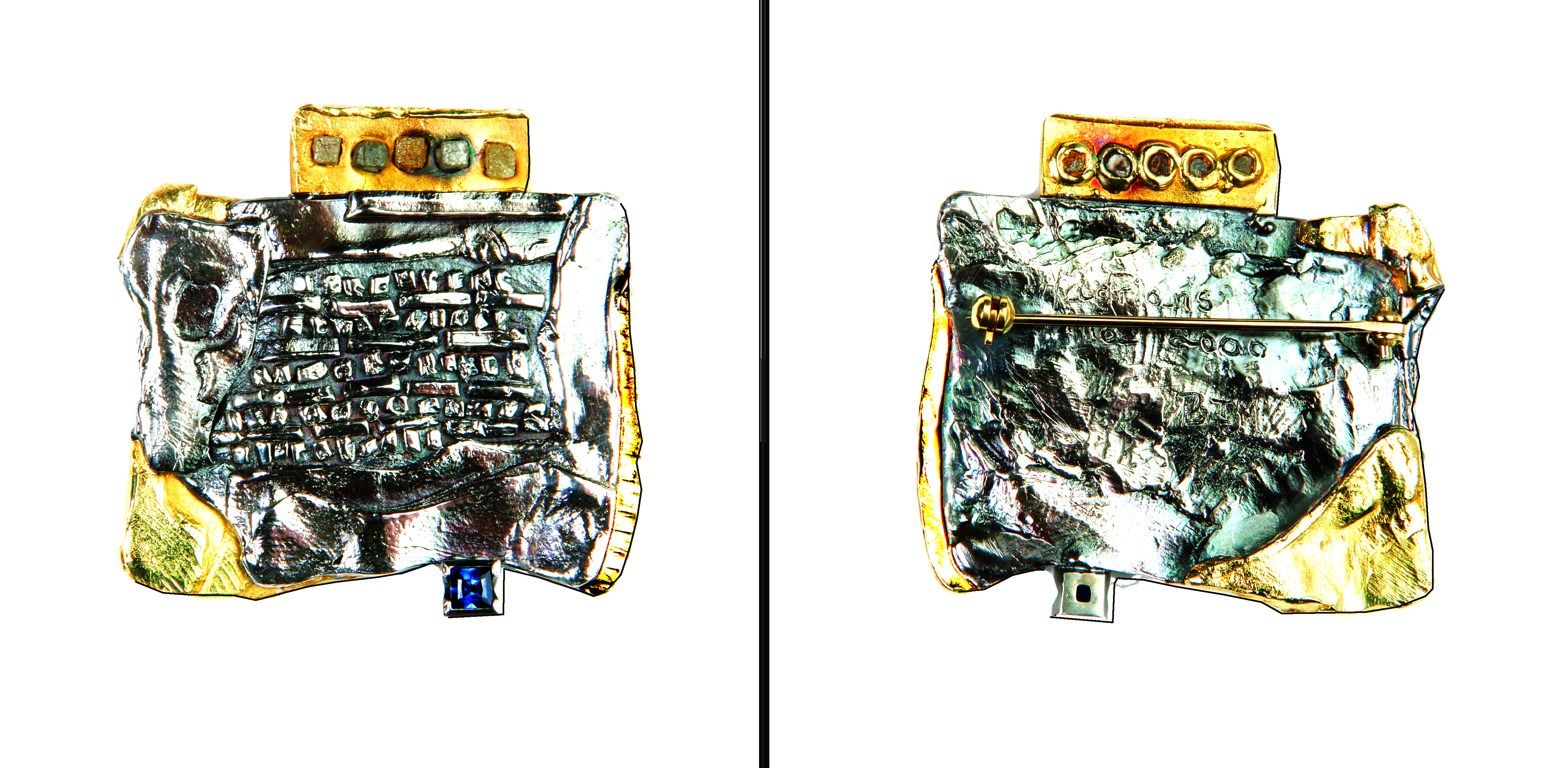
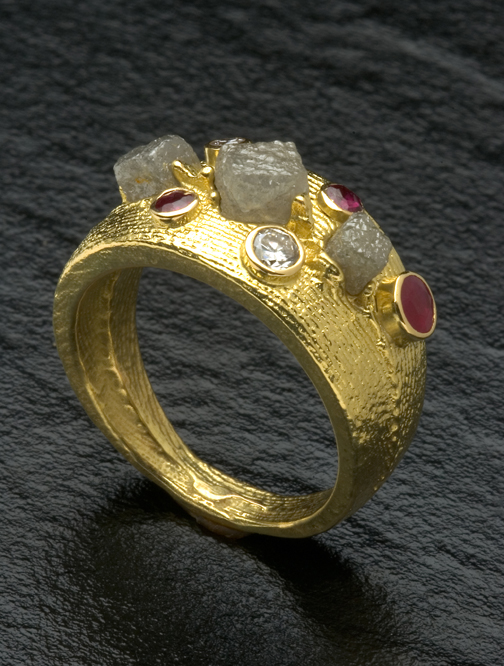
sterling silver, 18K gold, sapphire, raw diamonds
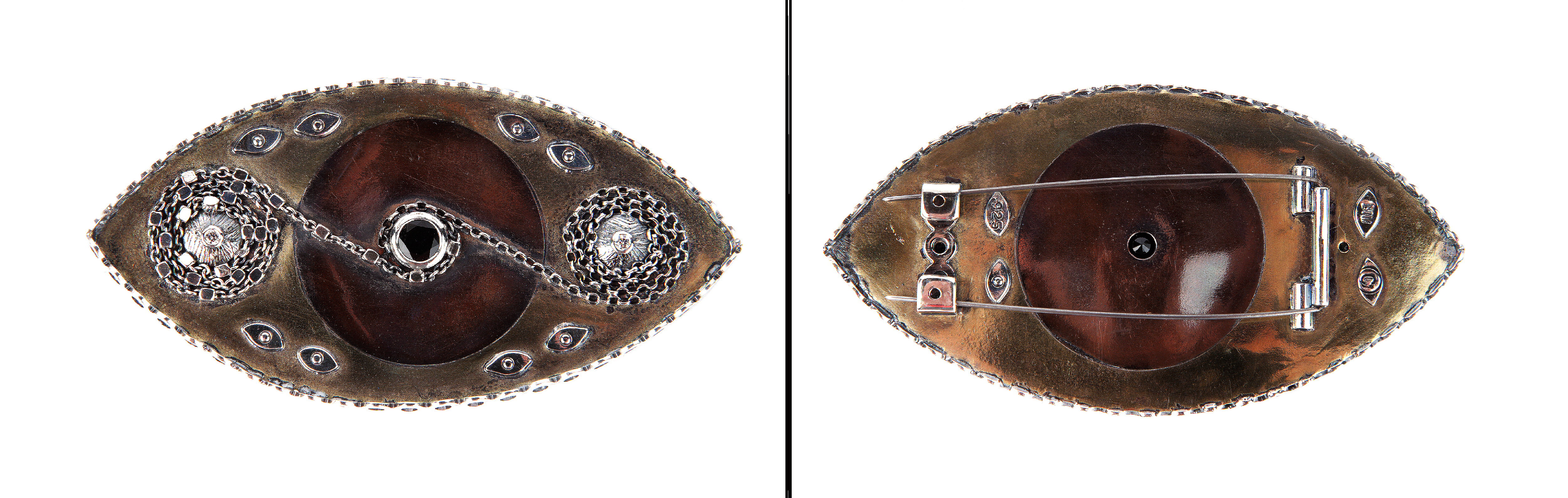
copper, sterling silver, cubic zirconias, spinel
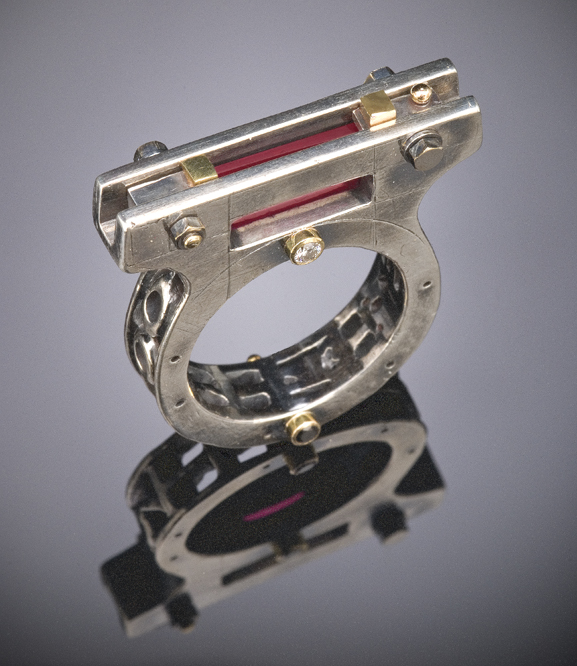
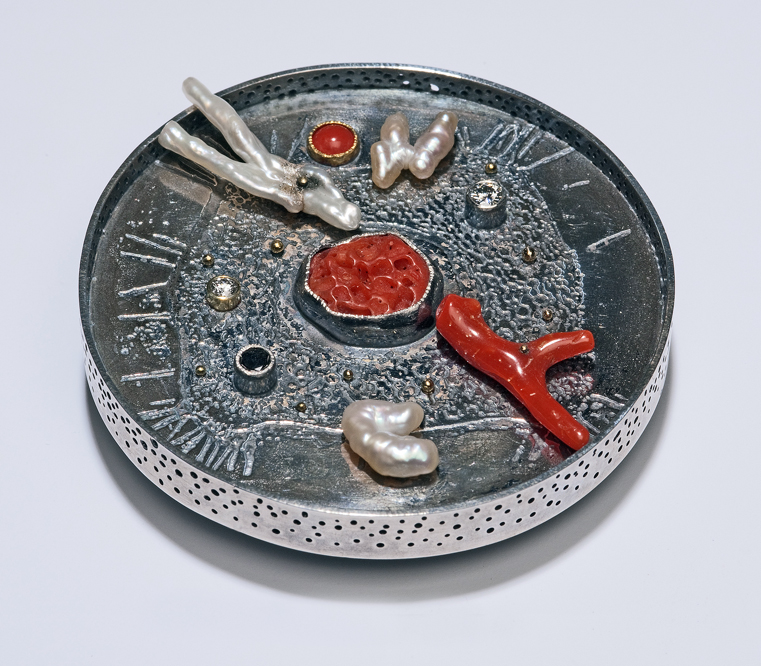
sterling silver, 18K gold, coral, pearls, diamonds
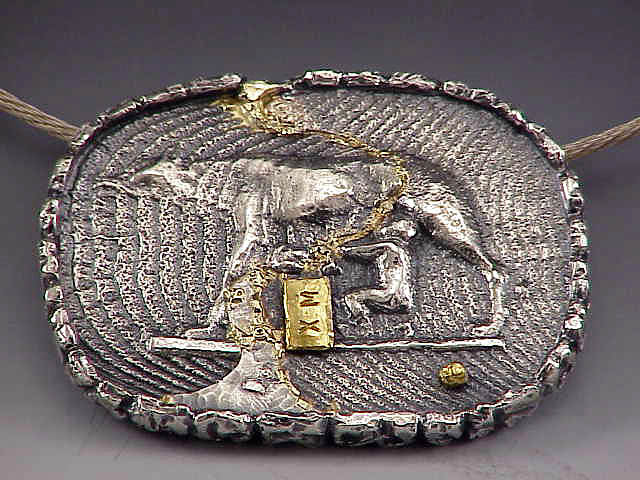
see description at end of page
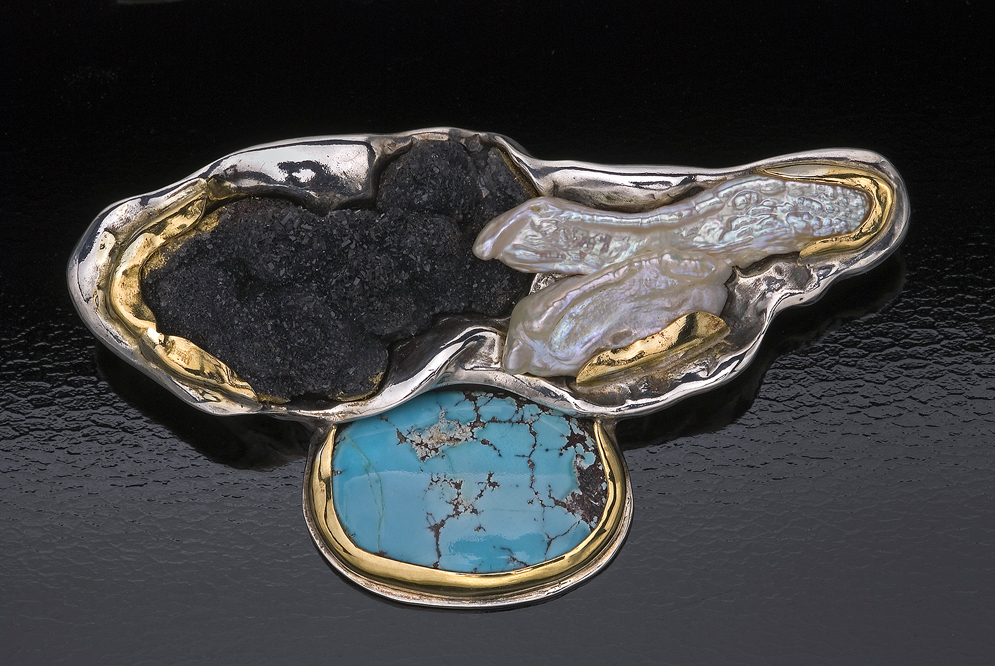
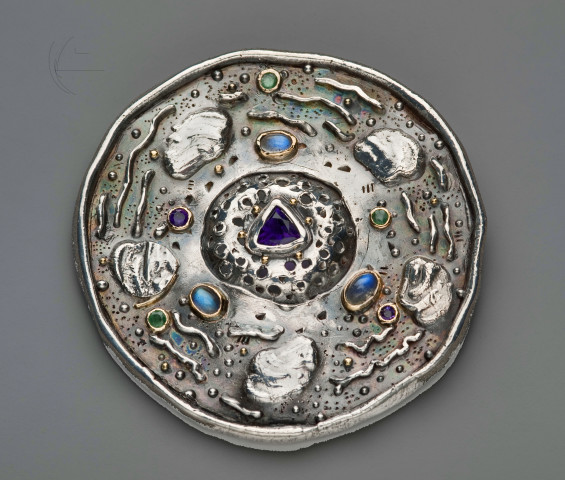
see description at end of page
see description at end of page
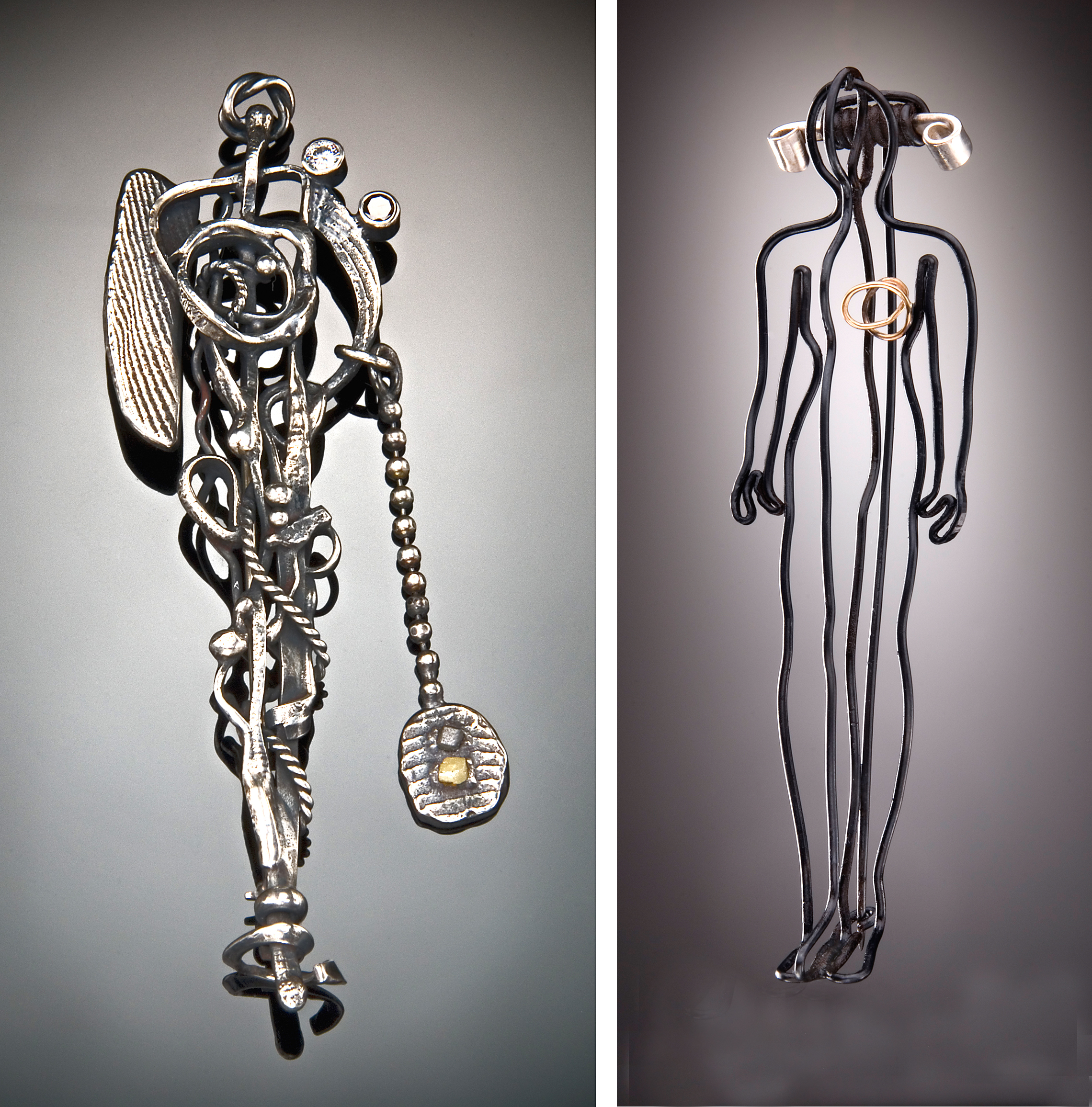
iron, sterling silver, 18K gold (right)
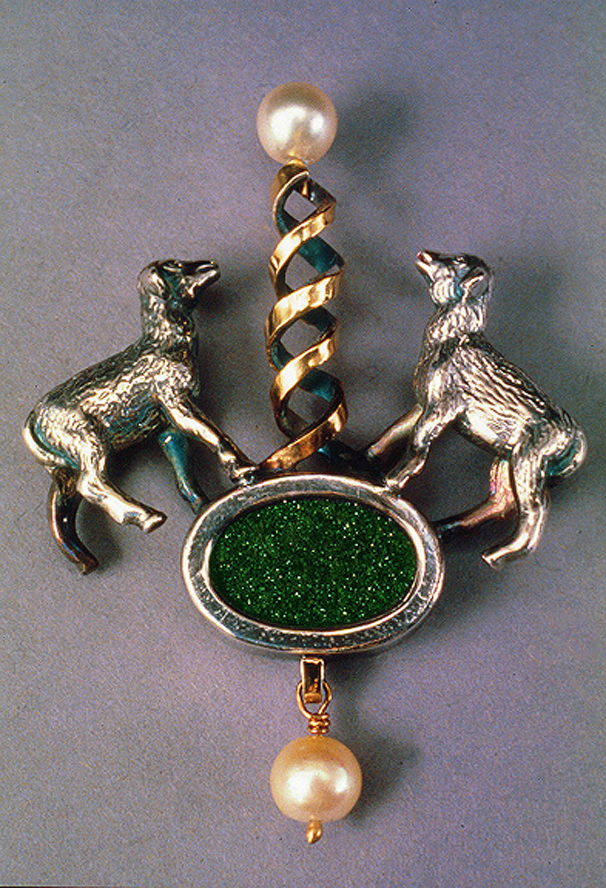
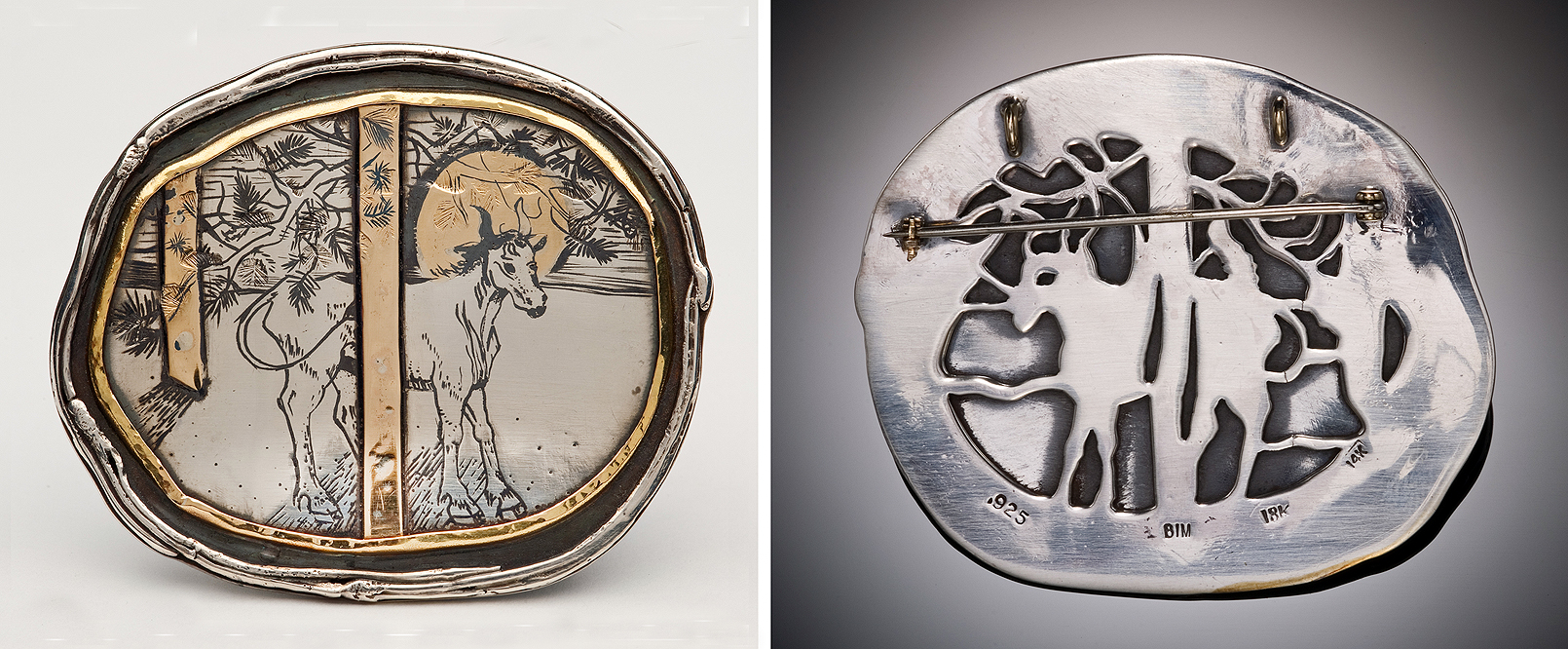
sterling silver, 14K gold, 18K gold, niello
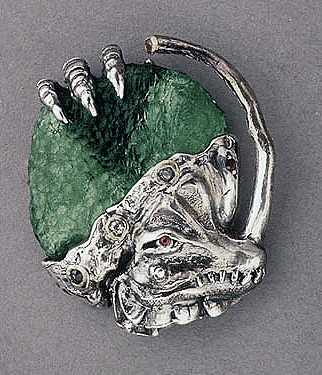
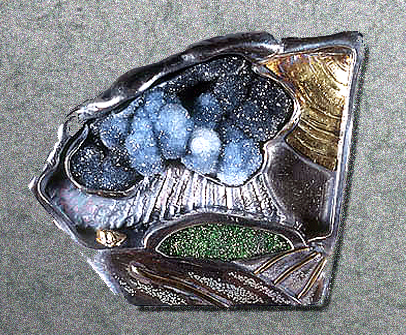
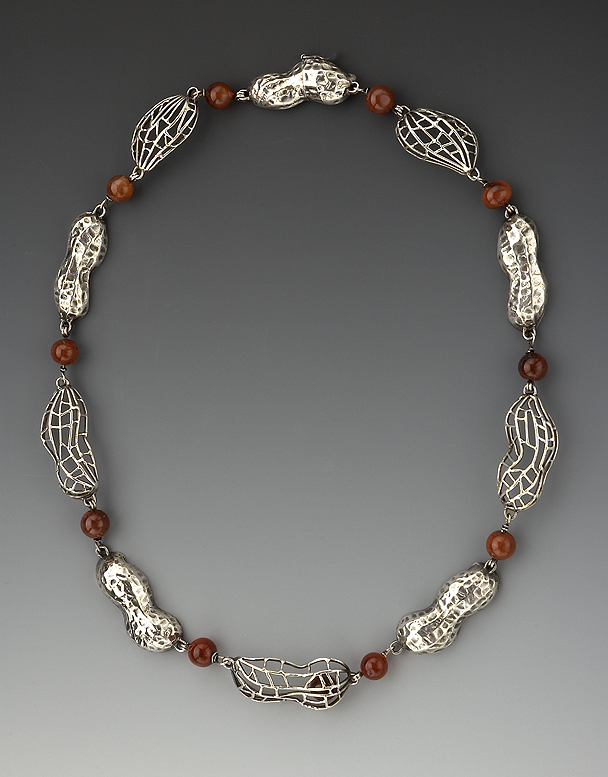
Description of Selected Objects
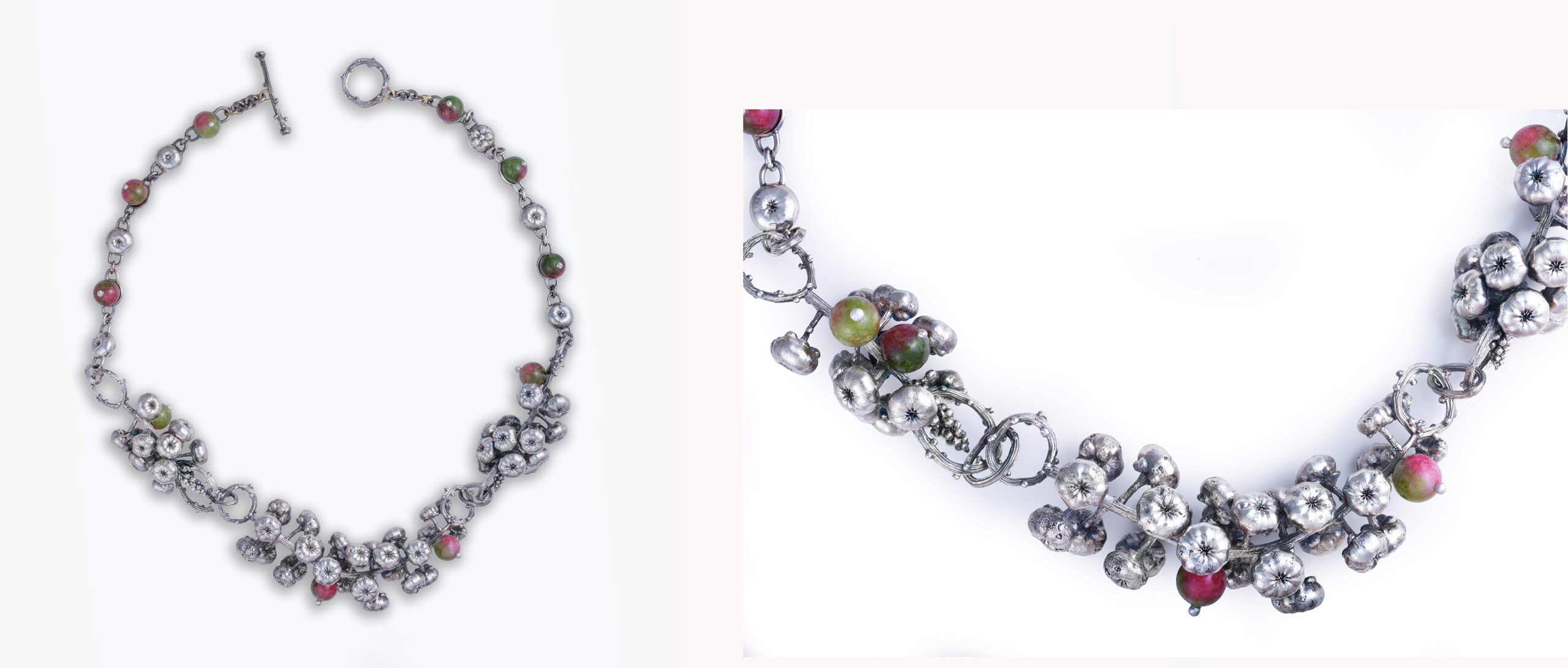
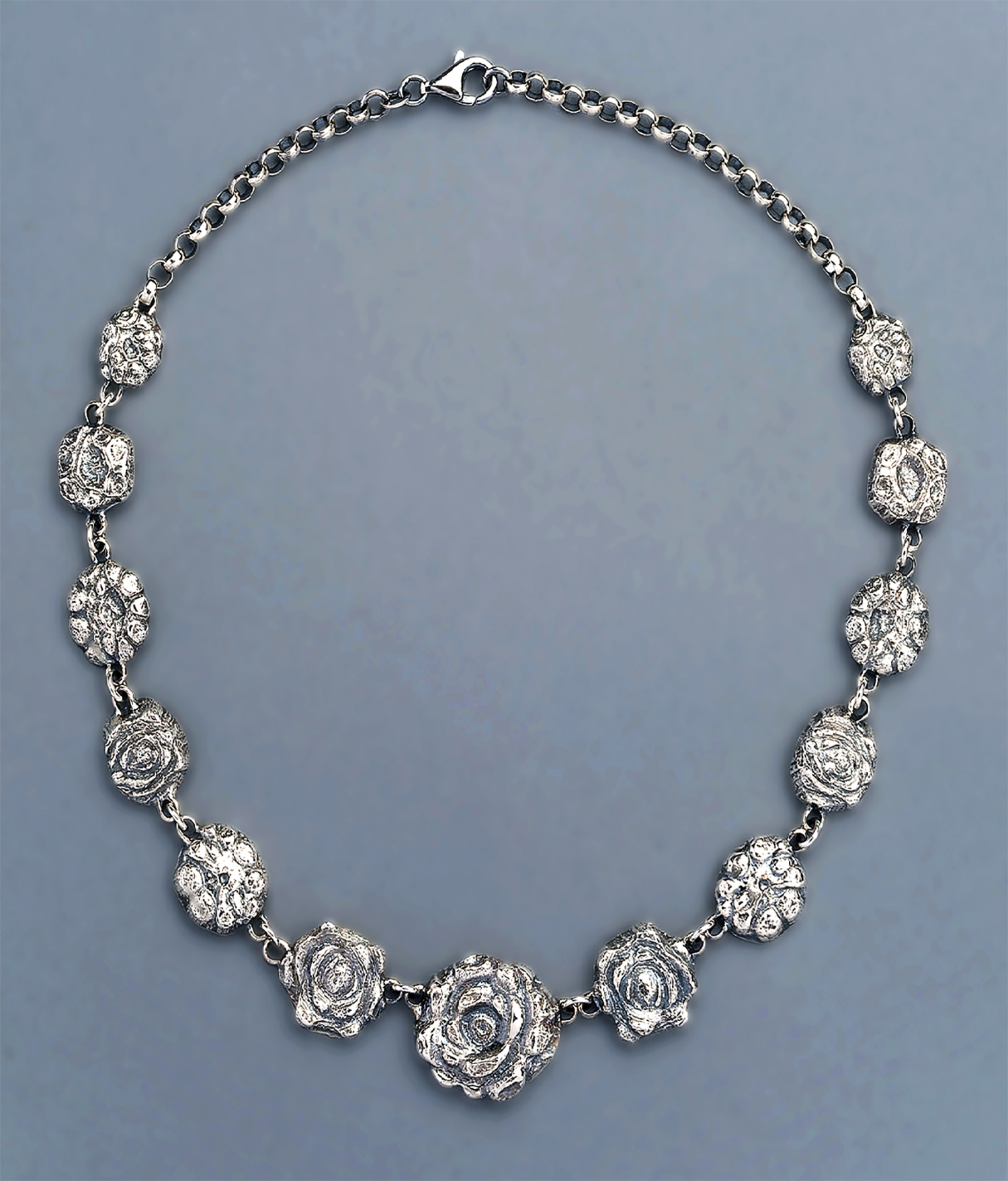
Pokeweed Berry Necklace — I am fascinated by pokeweed (Phytolacca decandra). It is a source of food, medicine, dye, ink, and it is beautiful. This hardy indigenous plant feeds birds, squirrels, foxes, opossums, deer, pollinators and insects. However, it can be poisonous to humans, pets and livestock. For years, I have watched the yearly life cycle of pokeweed which includes delicate white flowers to tiny green berries that grow and change color from pink, to magenta to blackish purple. The clusters of berries, called racemes, can contain new growth and mature growth on the same stem. The form, composition and color vary within each cluster. The stems and berries of pokeweed can be cast in metal incredibly well. When the berries have been eaten off the stem, the flower shape on the underside of the berry remains. They look like Japanese cherry blossoms, to me, and they cast beautifully.
Plankton Necklace — My Phytoplankton Necklace and Pendant is a representation of two phytoplanktons, Eucampia Zodiacus and Licmophora flabellate. They are made of silver, gold, diamonds, and opal. The necklace is composed of diamond (pure carbon) beads signifying the crucial role plankton play in the carbon cycle. The green diamonds reference photosynthesis, and the opal suggests water and air. Phytoplankton, “drifters in water,” perform nearly half of the photosynthesis and oxygen production on Earth. They are a crucial part of the marine food web and the carbon cycle. My representation of the palm-like Licmophora flabellate is from a drawing by the German biologist/artist Ernst Haeckel (1834-1919), in his famous book Art Forms in Nature, 1904.
Coral Reef Restoration Star Pendant — The Mars Corporation has a program for restoring endangered coral reefs worldwide. They make steel star forms on which coral is attached to grow and secure existing reefs which have been damaged. My jewelry pendant is a representation of one of the coral reef stars.
Marine Carbon Cycle Necklace is a representation of some of the many ways carbon cycles on Earth. The Ocean plays a critical role in carbon storage as it holds about 50 times more carbon than the atmosphere. The materials used in the necklace include marine fossils, gemstones whose chemical compositions reflect marine chemistry, and metals that are found in the ocean. The Marston Marble is a type of limestone found in Marston Magna, Somerset, England. Marston Marble contains an abundance of small ammonite fossils from the Jurassic Period, which makes it a highly decorative. This piece was sponsored by Georgia Sea Grant and the National Oceanographic and Atmospheric Agency.
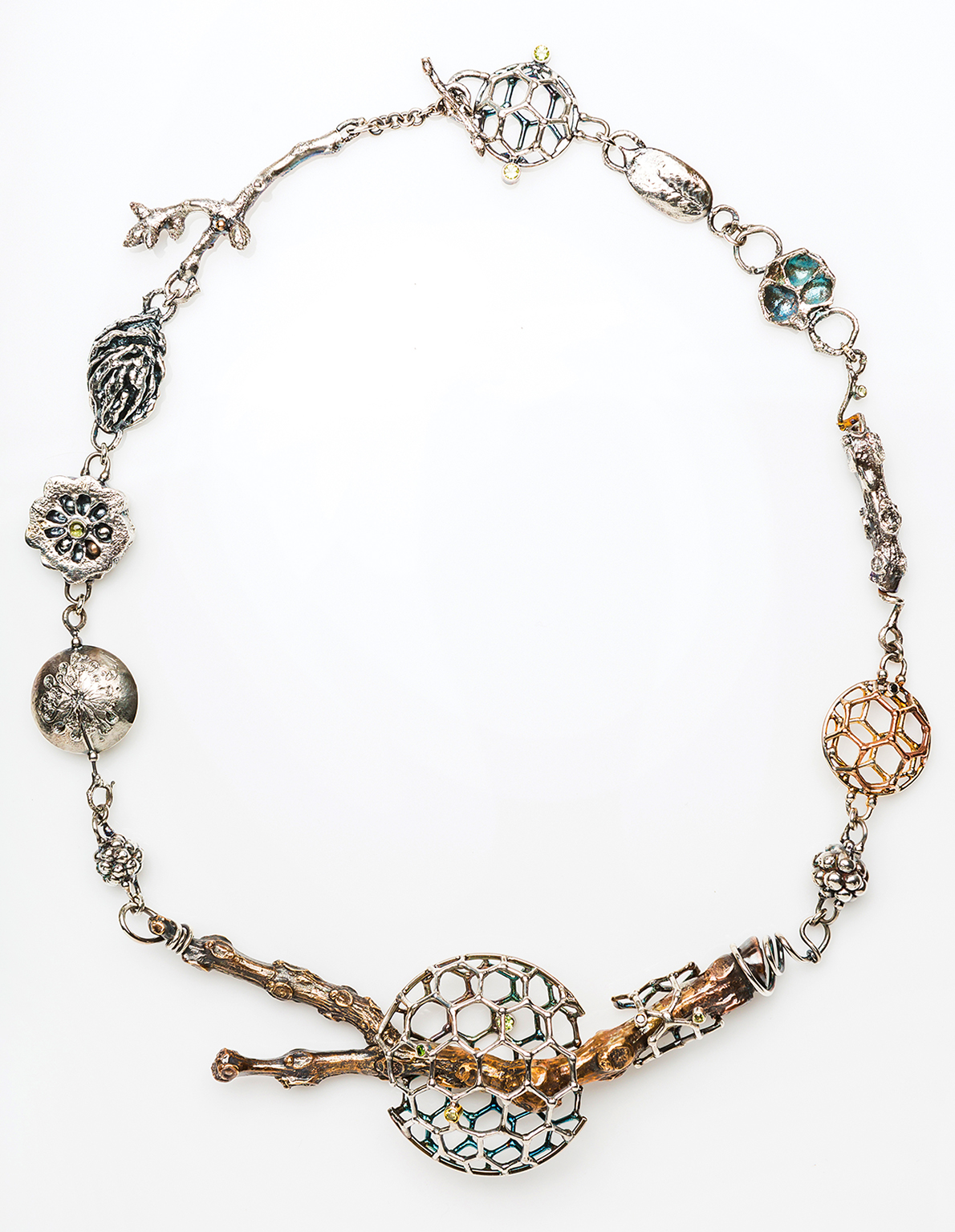
Carbon Cycle Necklace — This necklace represents various stages and components in the carbon cycle as observed in my yard during the year-long corona virus quarantine. Carbon cycles from the atmosphere into plants and living things, then decomposes and recycles again, coming full circle. My necklace, in circular form, is composed of plant forms — from seeds to mature plants to decomposing segments. Models of carbon molecules are interspersed among the plant elements of catalpa tree, young blackberries with seeds, flowering fennel, okra with seeds, a peach pit, oak tree and acorn, and smilax vine. Diamonds, which are pure carbon, are set within the molecules. Green peridot gemstones are included to suggest plant photosynthesis, a part of the carbon cycle. sterling silver, bronze, gold, peridot, diamonds 16″ x 1″ x 2″
Long Term Carbon Cycle Necklace – This piece represents various stages and elements in the carbon cycle. The large center silver and gold element is a cast wood cambium layer of a pine tree. Gold carbon molecules and an opal raindrop are on the surface of the wood, and the reverse has sheets of carbon molecules forming graphene, the bottom blue raindrop is topaz. A black diamond, pure carbon, represents the deep earth, perhaps volcanic, ancient origin of carbon. The green pendant and Smithsonite gemstones suggest photosynthesis and the role of plants and algae in the carbon cycle. The black Whitby jet gemstone is derived from wood that was changed under extreme pressure, under water, to form a type of coal. The rutilated quartz gemstone is suggesting the sun, crucial to life and the carbon cycle. The seashell element represents the marine organisms which play a central role in sequestering atmospheric carbon. The blue aquamarine suggests water. The remaining necklace links are carbon molecules, Buckyballs, and twigs from trees. sterling silver, 22K gold, 14K gold, Smithsonite, opal, Whitby jet, topaz, aquamarine, rutilated quartz, diamond, peridot. 16” x 1” x 2.5”
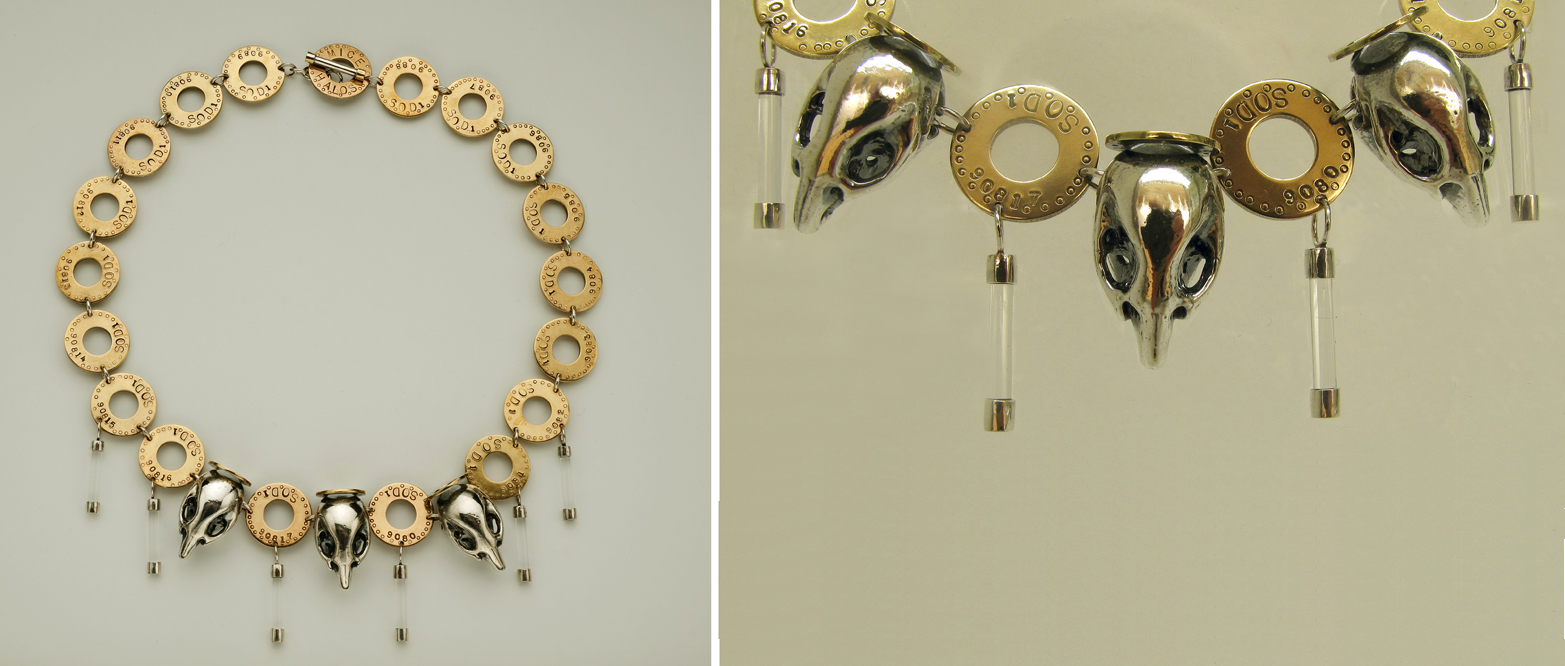
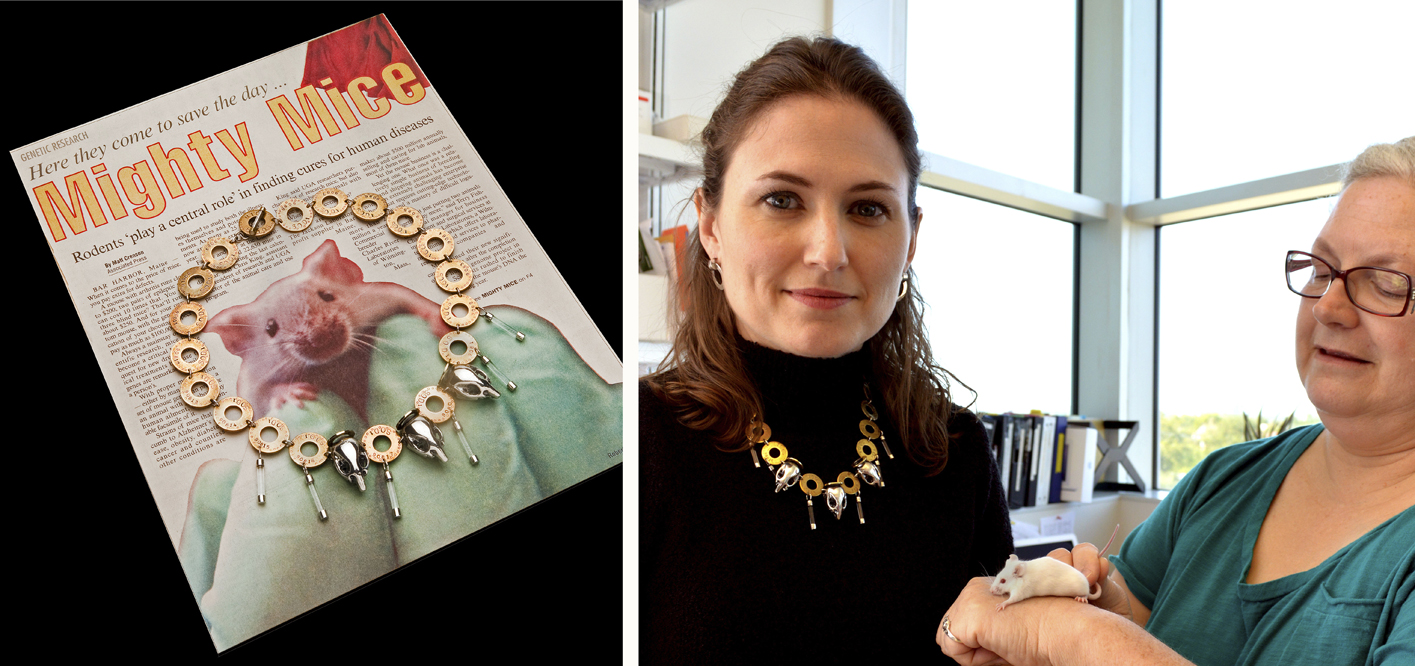
Research Mice as Saints — This necklace depicts research mice having been given ALS by injecting them with a defective chromosome, SOD1. This is known to occur in some patients with ALS (Amyotrophic Lateral Sclerosis, or Lou Gehrig’s) who have the inherited form of the disease. sterling silver, brass, Pyrex glass; 18” x 1” x 1”
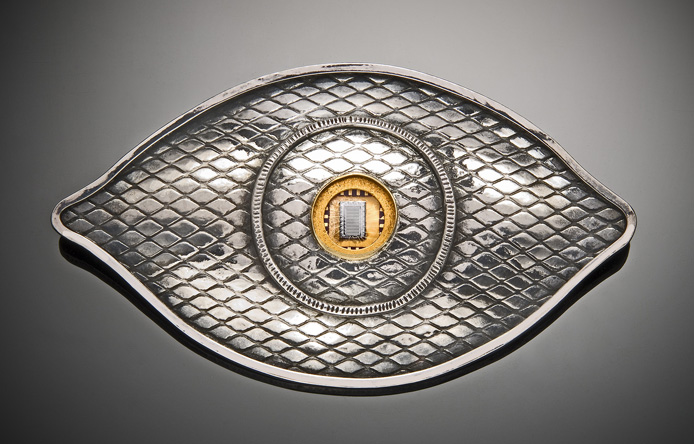
Grandmother’s Eye, Four Generations Brooch —
copper, sterling silver, cubic zirconias, spinel, 1.75″ x 1″ x .25″
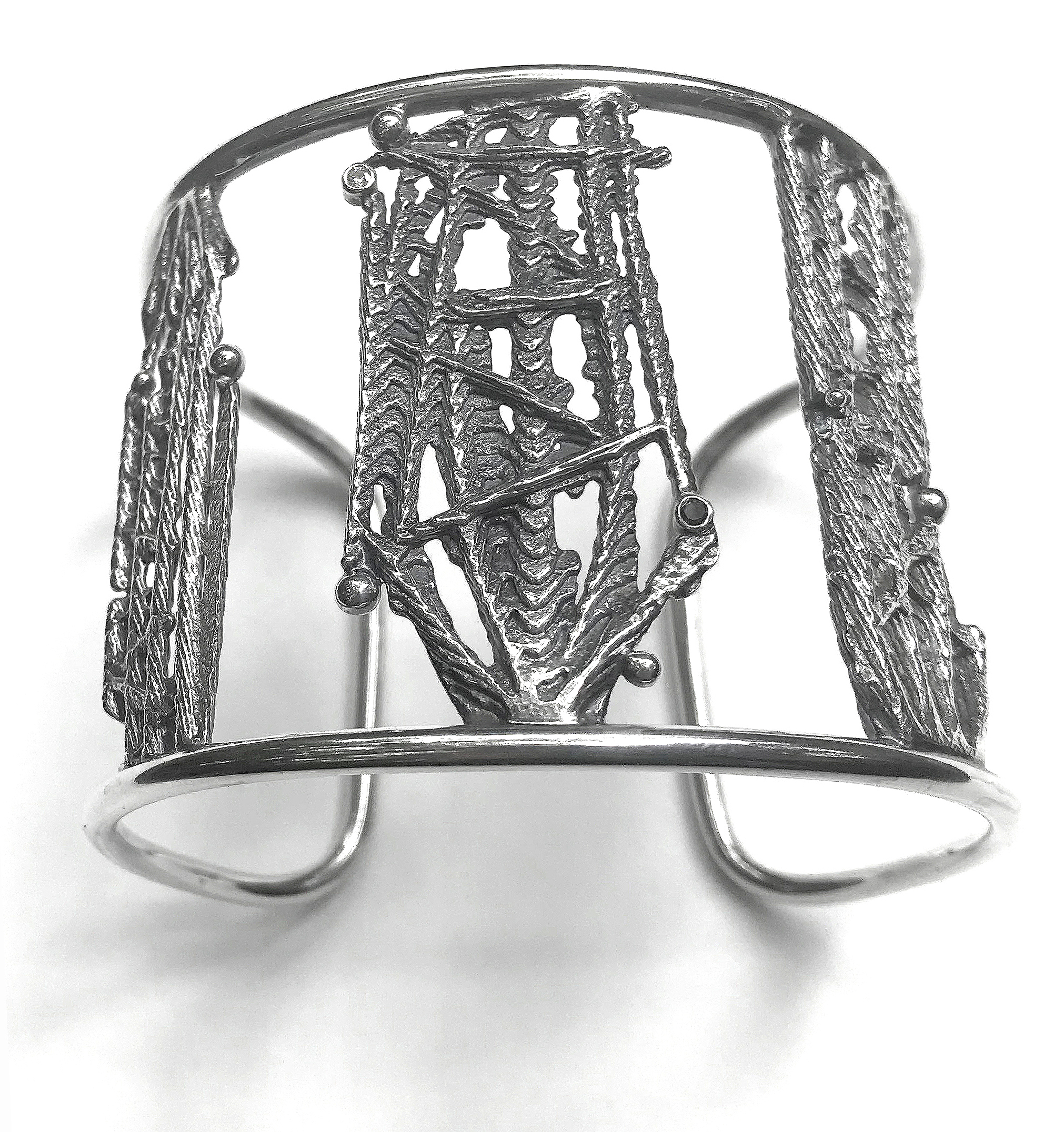
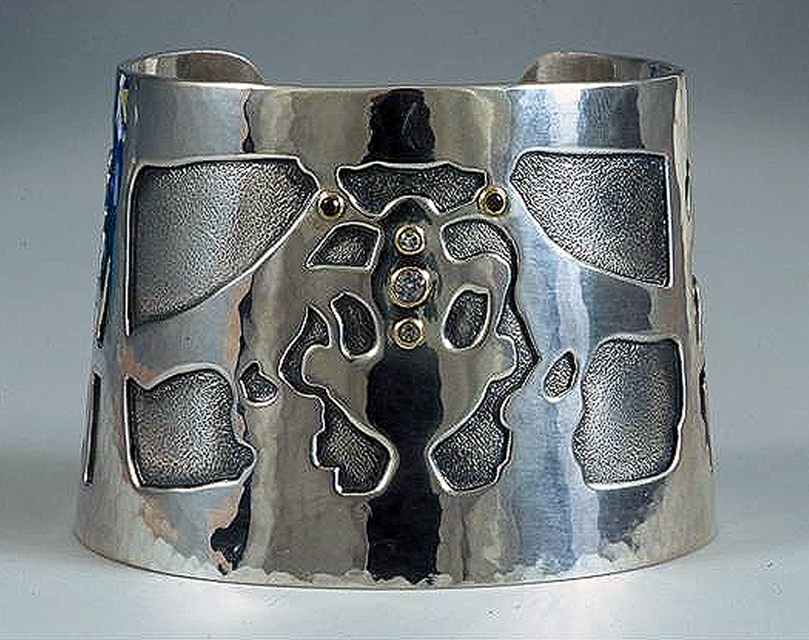
Everlasting Life – This cuff bracelet incorporates archetypal symbols of rejuvenation and immortality. It shows birds drinking water from a vessel — representing the spiritual as opposed to the material. Birds on a tree, or an abstracted pillar, symbolize the tree of life. sterling silver, black and white diamonds; 2.5” x 2” x 2.5”
The following descriptions are from Professor Dorothy Joiner’s review of “Barbara Mann: Form and Response,” Malone Gallery, Troy University, Troy Alabama, 2011. MetalSmith Magazine, August 2011, pages 4 & 52
Dorothy Joiner, Lovick P. Corn Professor of Art History, LaGrange College, LaGrange GA
“Barbara Mann: Form and Response,” Malone Gallery, Troy University, Troy Alabama
Because contemporary taste has tended to devalue beauty, and because jewelry is inevitably associated with the beautiful—few would adorn themselves with something ugly—jewelry has sometimes been assessed as craft rather than as “fine art.” Belying this prejudice, however, Barbara Mann’s works are sculptures in miniature, incorporating not only witty plays of form but also wide-ranging allusions to science, faith, and tradition, often evoking aesthetic meditations on life and death. Form and Response, a recent exhibition of her work at Troy University, displayed a wide range of the artist’s rings, brooches, pendants, necklaces, spoons, and liqueur cups, all expertly crafted in gold and silver.
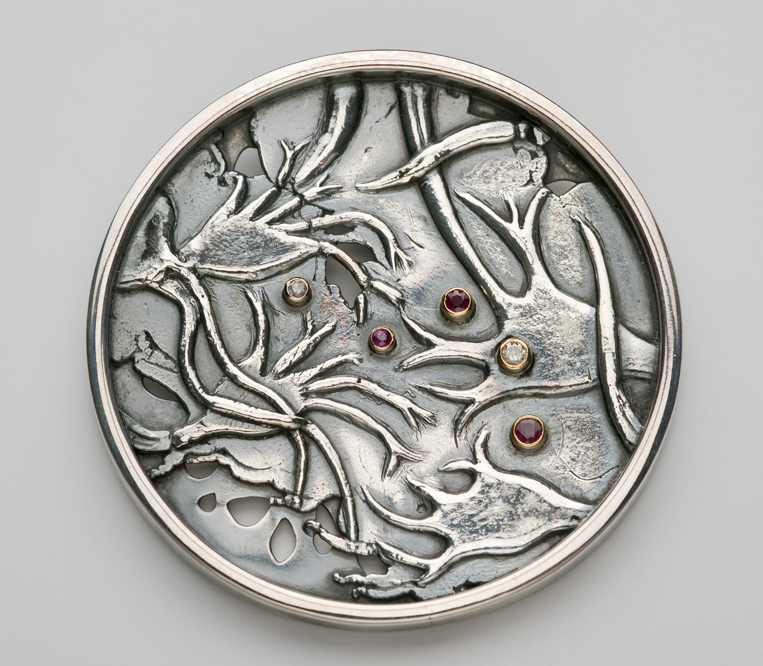
Reflecting Mann’s interest in science as well as a more personal association, Creation Stem Cells Brooch (2010) imitates a circular petri dish incubating stem cells, their branch-like extensions stretching toward each other in the miracle of growth. With an aesthetic alchemy, Mann transmutes these configurations into the celebrated creation scene from the Sistine ceiling, in which God the father reaches toward Adam, infusing his languid figure with vitality. Three rubies set in gold indicate health, and twinned diamonds convey energy. Irregular perforations of the surface offer depth at the same time that they adumbrate deterioration, the inverse of growth. Mann’s interest in these nerve-growing stem cells derives from her son’s struggle with Lou Gehrig’s disease, or ALS, a malady attacking the nervous system.
Research Mice as Saints (2010), a necklace also inspired by medical research, punctuates a string of reiterated brass washers with three silver mouse skulls, each crowned with a tiny halo, emblem of sanctity, earned by sacrificing their lives to research. Inscribed on each washer, the designation SOD1 indicates the enzyme now considered a possible cause of some forms of ALS.
Other works allude to life after death in a particularly creative way. A spiral of forged silver wire wraps around the white coral stem of Swing Low Sweet Chariot Liqueur Cup (2010). Undulations on the diminutive chalice indicate clouds, and the gold that fills a ragged crack near the lip symbolizes a burst of sunlight. An irregular pearl projecting from the stem suggests the “ pearly gates” of heaven, and a diminutive sphere of gold on the spiral refers to the wheels of the fiery chariot that descended in a whirlwind, taking up the prophet Ezekiel ( 2 Kings 2:11), Biblical source for the hymn from which the cup’s title is taken. On the underside of the base, a circle of lapis lazuli, whose hue refers to the heavens, is an emblem joining earth to sky. Mann’s cup brings to mind Jean Chevalier’s assessment of the chalice as “a vessel holding the draught of immortality.”
Echoing this theme, The Everlasting Life Bracelet (2004) relies on a motif from the famous mosaic in Ravenna repeated ubiquitously in Italian cemeteries: paired doves representing souls drinking from a fountain, symbolizing the waters of life. Adapting this convention, Mann layers stylized birds in polished silver over a textured base, somewhat like a palimpsest. Black diamonds create their eyes; and, set between them, white diamonds and blue aquamarines refer to the pure spiritual waters they imbibe.
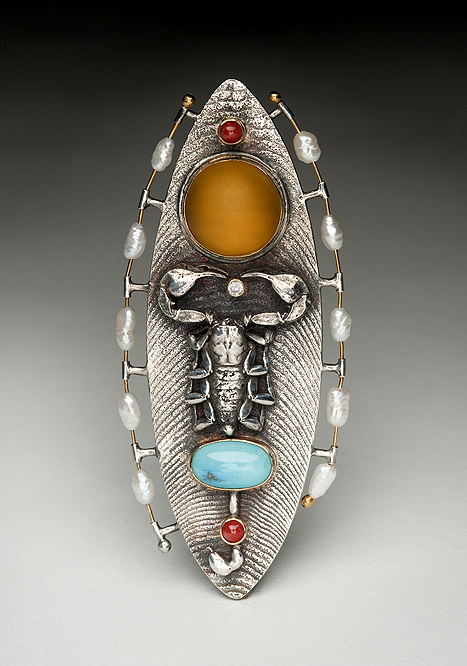
The artist also takes inspiration from Europe’s natural beauties, as in her light-hearted Mediterranean Brooch (2002). Wavy patterns on the graceful ellipse cast from a cuttlebone replicate the surface of the sea. This shape also suggests a boat whose gold railing is punctuated by freshwater pearls. Cabochons, one yellow glass for the sun, the other turquoise for the sea, indicate the intense colors of the region. A cast silver scorpion in the center stands for the continuity of life from prehistory to the present, and the diamond between its claws indicates both the resplendent light and a captured treasure.
Mann’s artful jewelry, rich in allusions to art, science, and the charms of nature, certainly provide handsome adornment. But at the same time these bantam sculptures offer much more, inspiring the viewer to ruminate on the great imponderables of nature, life, and death and on their intersection with modern science.
Dorothy Joiner, Lovick P. Corn Professor of Art History, LaGrange College, LaGrange GA 30240
email: bimann2@hotmail.com